
Proactive Mindset for Data Engineers
How to think beyond (data) pipelines and stay ahead of data problems?

In the world of data engineering, technical skills are only part of the equation. What often separates great engineers from the rest is not just how well they build data pipelines, but how well they foresee challenges before they arise.

A proactive mindset is a defining trait of effective data engineers at every level.
In routine, repetitive tasks, proactivity can be learned fairly quickly. Patterns emerge, failure points become obvious, and improvements feel natural. However, the real challenge appears in non-repetitive, evolving projects where no clear pattern exists yet. In these cases, experience, critical thinking, and structured thinking become essential to foresee potential issues before they materialise. A proactive engineer learns to spot risks not just by memory, but by systematically thinking through what could go wrong.
In this post, we will explore:
What does it truly mean to be proactive in data engineering?
Core areas where proactivity is important.
Best practices to build a proactive mindset.
Common pitfalls to avoid.
How to start today?
What Does "Proactive" Mean in Data Engineering?
At its core, being proactive means acting before a problem happens, not simply reacting after it occurs. In data engineering, this mindset extends beyond building functional pipelines or fulfilling immediate requirements. It’s about anticipating future needs, potential failures, scalability challenges, and operational risks.

A proactive data engineer doesn't just think about "what needs to work today?" but also;
What could go wrong tomorrow?
How might data volumes change?
How will others use this system?
What happens if external dependencies fail?
By asking these questions early, we can design systems that are easier to maintain, scale, and recover. We reduce firefighting, gain confidence in our work, and create better outcomes for downstream teams.
Core Areas Where Proactivity is Important
Being proactive doesn’t mean doing everything upfront. It means knowing where to look ahead and take initiative.
In our experience, the areas below are already well-known to most data engineers. But in this post, we want to approach them with a proactive mindset, focusing on the decisions and habits that help us avoid potential issues.
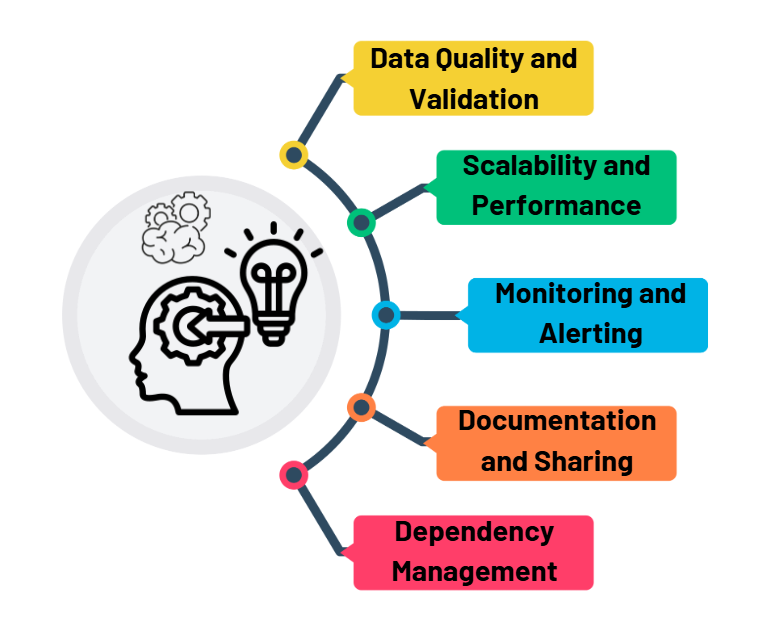
1. Data Quality and Validation
Waiting for downstream teams to report broken data slows everyone down. We can prevent this by building checks early, such as null value alerts, unexpected volume drops, or schema mismatches. Even lightweight validation rules help catch issues before they become business problems.
Ideally, data issues are detected and flagged automatically before anyone else notices, saving time, trust, and business impact.
For more details about data quality, check out our data quality series here1.
2. Scalability and Performance
It’s easy to build pipelines that work with small datasets. But will they handle 10x more data in six months? Thinking about query performance, partitioning, and parallelism early can save costly rework later. It doesn’t mean we should be over-engineering things, but it means we should be designing with some growth in mind.
Ideally, systems continue to perform smoothly as data grows, without needing major rewrites or urgent fixes.
3. Monitoring and Alerting
Proactive systems don’t just run, they tell us when something’s off. Setting up alerts for delays, failures, or unusual patterns helps us respond faster. Even better, a good dashboard can help us spot trends before they become incidents.
Ideally, the system alerts us before business users report issues, and dashboards provide early signals of unusual activity.
4. Documentation and Sharing
We often assume we’ll remember why a certain decision was made or that others will figure it out. But clear documentation, onboarding guides, or even simple code comments can prevent confusion later. This is a small investment with long-term value.
Ideally, even if the entire data team changes overnight, the new team should be able to navigate, and understand the system.
5. Dependency Management
APIs change, teams restructure, data sources disappear.
By keeping track of external dependencies and building fallbacks or versioning where needed, we reduce surprises when something shifts.
Ideally, when a dependency breaks or changes, we already have a plan in place or the impact is contained and visible.
Of course, it’s also important to strike a balance, being thoughtful about future scenarios without trying to account for every possible edge case, so we stay both efficient and careful in our design choices.
Best Practices to Build a Proactive Mindset
Being proactive isn’t just about technical skills; it’s also about habits, awareness, and how we approach problems over time. Here are some practices we've found useful to develop and maintain a proactive mindset as data engineers:
1. Think in Systems, Not Scripts
Instead of thinking about isolated tasks, try to see the system as a whole.
How does this component fit into the bigger picture?
Who relies on it, and what happens when it breaks?
This habit helps us design for clarity, stability, and reuse.
2. Make Small, Predictable Improvements
We don’t need to solve everything at once.
But we can leave things slightly better each time we touch them. Whether it’s refactoring a messy query or adding a missing comment, small actions build up over time.
3. Review Incidents and Near-Misses
When something fails (like all the time), pause and reflect.
What was the root cause?
Could a small change have prevented it?
Retrospectives are valuable not just for fixing the issue but for learning how to avoid similar ones in the future.
4. Ask “What If” Regularly
Proactive thinking often starts with a simple “what if?”
What if this job fails on a public holiday?
What if this query runs with more data?
What if schema changes in the source?
These questions help surface risks early without needing a formal risk framework.
4. Build Feedback Loops Into The Work
Monitoring, alerts, test results, even feedback from analysts, these are all signals. Creating ways to observe how our systems behave over time helps us spot patterns, catch issues earlier, and improve with confidence.
5. Stay Curious About How Others Use Our Work
Sometimes we build something that works well for us but causes friction for others. Asking users how they interact with our pipelines, datasets, or tools helps us design more useful, robust systems.
These habits don’t require big changes. They help us move from just getting things done to building systems that are reliable, thoughtful, and ready for what comes next.
Common Pitfalls to Avoid
While developing a proactive mindset, it’s easy to fall into a few traps. These patterns may feel productive in the short term, but they often lead to more work and confusion down the line.

1. Trying to Future-Proof Everything
Planning ahead is valuable, but trying to handle every possible edge case from day one can lead to overly complex systems. It’s better to build something clear and adaptable than something that tries to predict every future need.
2. Mistaking Proactivity with Paranoia
Being proactive doesn’t mean expecting everything to fail or designing for extreme scenarios all the time. If we spend too much energy imagining every rare failure, we risk slowing down progress and over-complicating simple solutions. Proactivity should feel empowering, not exhausting.
3. Ignoring Feedback Loops
If we never look back at how our systems behave in production, we miss valuable learning opportunities. Skipping alerts, logs, or stakeholder feedback means repeating the same mistakes instead of improving over time.
4. Designing in Isolation
We sometimes focus so much on our own code or pipeline that we forget who depends on it. Without communication, we risk building something that’s hard to use, extend, or trust by others on the team.
5. Letting Urgency Take the Lead
It’s easy to rush through tasks when deadlines are tight. But skipping documentation, skipping testing, or avoiding deeper questions often leads to more problems later. A few extra minutes spent intentionally can prevent hours of debugging.
How to Start Today?

Building a proactive mindset doesn’t require a new role, a big initiative, or permission from anyone. It starts with how we approach our day-to-day work
Pick One System You Own and Ask “What Could Go Wrong?”: Choose a pipeline, a dashboard, or a dataset you maintain. Take 15 minutes to map out one or two failure points and consider what small change might help detect or prevent those issues.
Leave Something Better Than You Found It: Next time you work on a script or query, improve one small thing. For example, add a comment, rename a variable, or refactor a step. These small improvements build up.
Add One Lightweight Check: We don’t need a full monitoring suite to get started. A single alert for a volume drop or a schema mismatch can go a long way in surfacing hidden issues.
Talk to One Downstream User: Ask how someone else uses your data or depends on your pipeline. You may uncover insights that can lead to small but impactful changes.
Also, the one that we find the most useful;
Spend 5 minutes every Friday asking:
What worked well? What surprised us? What caused rework?
This reflection helps turn experience into awareness and awareness into better decisions over time.
Conclusion
Proactivity isn’t about predicting everything or building perfect systems, it’s about being thoughtful, intentional, and just a few steps ahead. As data engineers, we work in fast-changing environments, and small proactive habits can make a big difference over time.
If you find the post helpful, you may also like the post below.


We Value Your Feedback
If you have any feedback, suggestions, or additional topics you’d like us to cover, please share them with us. We’d love to hear from you!
https://pipeline2insights.substack.com/t/data-quality